
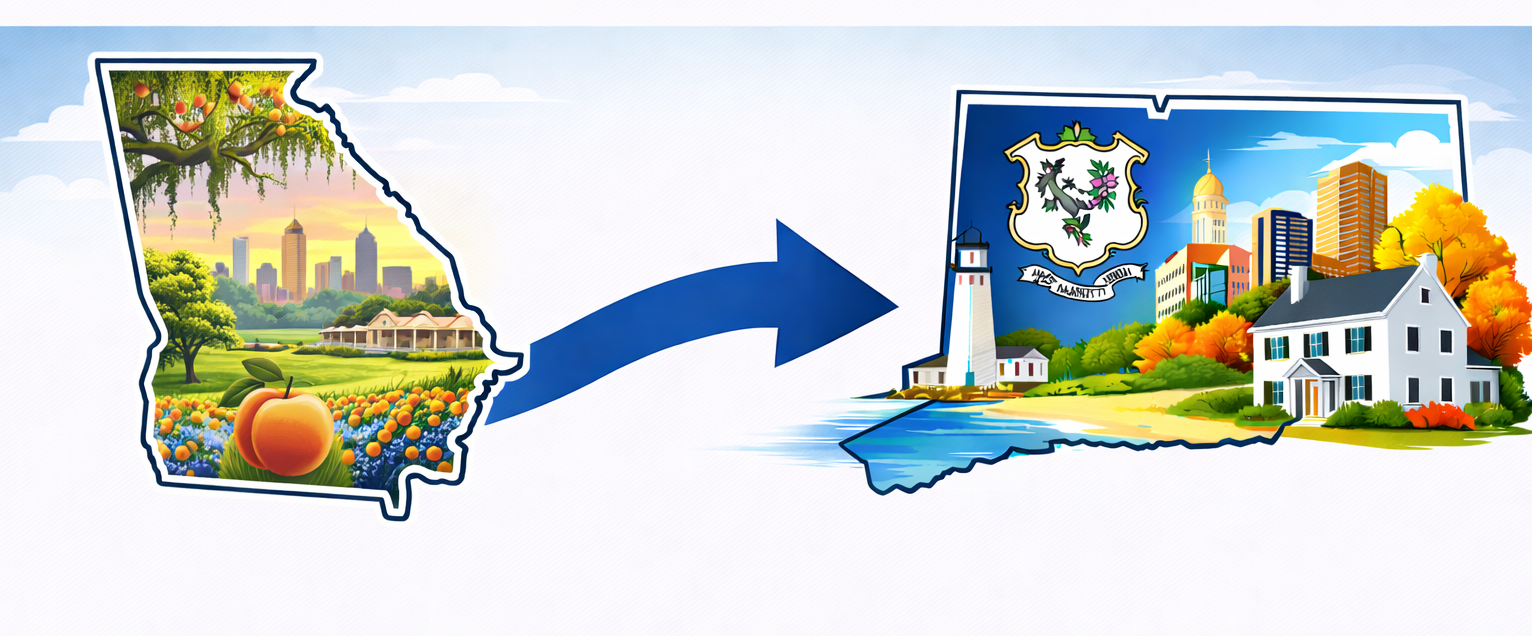
Moving to Connecticut from Georgia
What to expect near Hartford
Relocating from Georgia to Connecticut brings a noticeable shift in climate, housing, and daily life.
The Hartford area offers historic towns, cooler summers, and access to the broader Northeast. Life here feels different from the Southeast in several important ways.
Here is what the move actually looks like.
1. Winter becomes part of daily life
Georgia winters are short and mild.
Hartford winters are cold, snowy, and long. The cold season stretches from December through March and snowstorms arrive every year.
- Snowstorms every winter
- Freezing temperatures for extended periods
- Snowplows and storm parking bans
- Heating costs throughout winter
Snow shovels, ice scrapers, and winter coats become part of everyday life.
Spring arrives later than in Georgia. Trees often remain bare until April and the growing season starts weeks behind the Southeast.
Fall becomes one of the most popular seasons. Cool air, foliage season, and apple orchards define autumn across central Connecticut.
Summer creates the opposite surprise.
Compared with Georgia, Connecticut summers feel milder and less humid. Temperatures are lower and the humidity rarely reaches the intensity common in Atlanta or Savannah.
Warm days still happen, but the season feels noticeably more comfortable.
2. Homes are older and built differently
The housing stock near Hartford reflects New England history.
A large share of homes were built between the 1920s and 1940s, with many others from the mid-20th century.
You will regularly see:
- Colonial homes
- Cape Cod houses
- Brick construction
- Tree-lined neighborhoods
- Full basements
Basements are standard in Connecticut homes. That alone surprises buyers relocating from the South.
Cooling systems also differ.
- Central A/C is not universal
- Window A/C units still appear in older homes
Another major difference:
Many Connecticut homes rely on baseboard heating or radiators instead of forced air systems.
3. Cost of living increases
Property taxes in Connecticut run higher than most areas of Georgia.
Home prices are also higher in strong Hartford suburbs.
Utilities increase in winter because heating becomes a major household cost.
The tradeoff is regional access.
- About 2 hours to Boston
- About 2 hours to New York City
- About 90 minutes to Rhode Island beaches
- A few hours to skiing in Vermont
Hartford sits in the center of the Northeast corridor with easy access to several major destinations.
4. Wildlife looks different here
Georgia residents are used to sharing space with wildlife, and Connecticut is no different.
The biggest difference is the number of venomous snakes.
Georgia has dozens of snake species and several venomous ones. Connecticut has only fourteen snake species and just two venomous ones: the timber rattlesnake and the northern copperhead.
Wildlife remains part of everyday life across the state.
- Black bears
- White-tailed deer
- Red-tailed hawks
- Wild turkeys
Seeing deer in a backyard is normal in many towns. Hawks frequently circle above neighborhoods and wooded areas.
The animals change, but nature stays present.
5. The movie industry looks very different
Georgia has become one of the largest film production centers in the United States.
Major Hollywood productions are filmed across the state every year. Atlanta alone hosts dozens of large studio projects and big-budget films.
Connecticut’s film scene looks much smaller.
Instead of Marvel movies or major studio blockbusters, filming here usually involves smaller productions.
The projects most likely to appear in Connecticut are Hallmark or Lifetime holiday movies filmed in classic New England towns.
Seeing fake snow and Christmas decorations in the middle of summer is a very Connecticut experience.
6. Town selection matters
Connecticut towns operate independently.
Near Hartford, buyers commonly compare West Hartford, Glastonbury, Wethersfield, Farmington, and Simsbury.
Each town controls its own:
- Property tax rate
- School system
- Zoning rules
Town choice directly affects lifestyle, taxes, and convenience.
Two neighboring towns can feel completely different even when they sit only ten minutes apart.
7. The real estate process feels more traditional
Real estate transactions in Connecticut follow a different structure than in much of the South.
- Attorneys handle closings
- Home inspections are standard
- Oil heat remains common
- Septic systems still exist in some areas
Because homes are older, buyers evaluate roof age, heating systems, and electrical panels carefully.
8. Lifestyle tradeoffs
The move from Georgia to Connecticut changes everyday life.
Georgia offers longer warm seasons and newer subdivisions.
Connecticut offers historic towns, cooler summers, and direct access to the Northeast.
- Four real seasons
- Historic New England neighborhoods
- Walkable town centers
- Access to Boston and New York City
Moving from Georgia to the Hartford area replaces long Southern summers with dramatic seasonal change.
The tradeoff includes colder winters, older homes, and higher taxes.
It also delivers cooler summers, classic New England towns, and some of the best regional access in the country.
The real question: does that trade make sense for your lifestyle?