
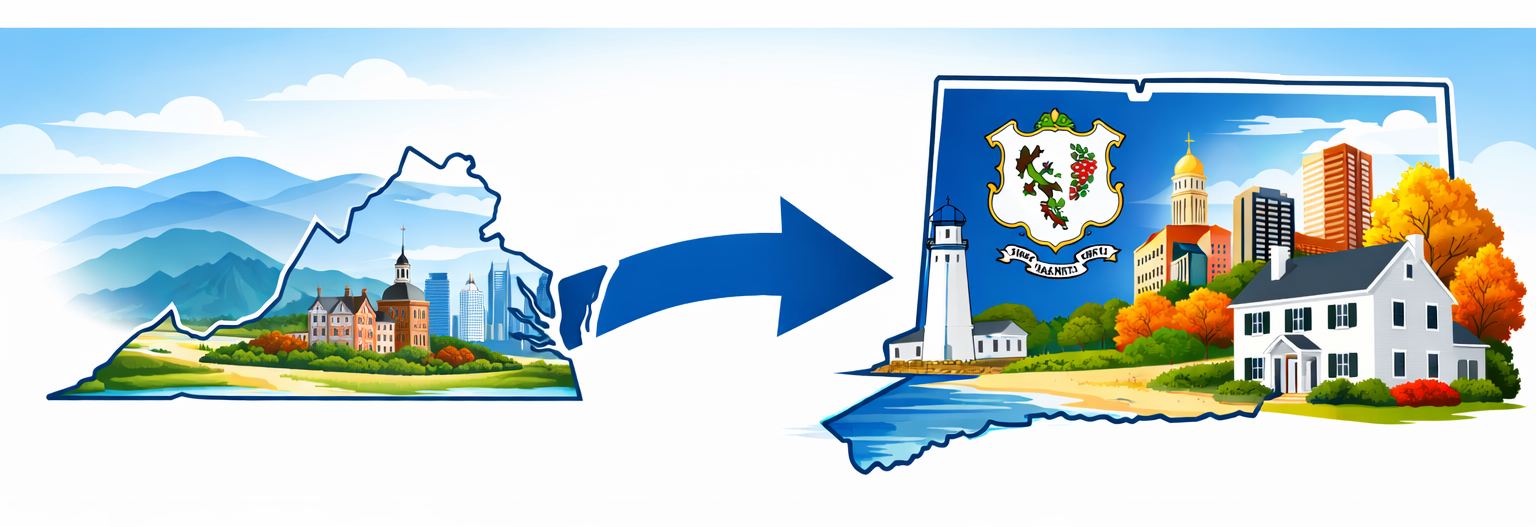
Moving from Virginia to Connecticut
What to expect near Hartford
Virginia and Connecticut can feel similar on paper.
You get seasons in both places. You get suburbs, cities, and small towns.
But day-to-day life near Hartford will still feel different.
1. Winters are colder and longer than most of Virginia
If you’re coming from Northern Virginia, Richmond, or Hampton Roads, you’ve likely seen snow.
Near Hartford, you’ll see more of it, and it tends to stick around longer.
You can expect:
- Snowstorms between December and March
- Cold snaps that last days, not hours
- Plows, salt, and storm parking bans in some towns
- Higher heating use through winter
Summer can still feel hot and humid.
Fall is a highlight. Cooler air and strong foliage season.
2. Town choice matters a lot
In Virginia, counties often drive schools, services, and taxes.
In Connecticut, towns drive almost everything.
Near Hartford, you’ll likely compare towns like:
- West Hartford
- Glastonbury
- Wethersfield
- Simsbury
Each town has its own:
- School district
- Property tax rate
- Town services
- Neighborhood feel
Your mailing address can change your taxes and your school system.
3. The housing stock is older
Many Hartford-area towns have a lot of homes built between the 1920s and 1940s.
You’ll also see plenty from the 1950s through 1990s.
Expect styles like:
- Colonials
- Capes
- Tudors
- Raised ranches
Common features include:
- Hardwood floors
- Smaller closets
- Basements as standard
- Older mechanical systems that still work fine
One big difference from many Virginia homes:
Central heat and central A/C are not always standard.
You’ll often see baseboard heating or radiators, plus window A/C units.
4. Costs feel different, especially taxes
Buyers moving from Virginia often notice two things fast:
- Property taxes can be higher
- Utilities can run higher in winter
Home prices vary by town, school district, and commute.
Some Hartford suburbs feel comparable to strong Virginia suburbs. Others feel like a deal.
5. You’re close to major Northeast destinations
Hartford’s location gives you options.
From the area, you’re roughly:
- 2 hours to Boston
- 2 hours to New York City
- 1.5–2 hours to the Rhode Island shoreline
- A few hours to Vermont skiing
Weekend travel gets easier than many people expect.
6. The real estate process can feel more attorney-driven
In Connecticut:
- Attorneys handle closings
- Inspections are common
- Older homes mean you watch roof age, heating systems, and electrical panels
- Oil heat and septic systems still exist in some areas
Multiple offers can happen in the most in-demand towns.
Updated kitchens matter. Finished basements matter.
The bottom line
Moving from Virginia to the Hartford area usually feels familiar at first.
Then you notice the details: colder winters, older homes, and towns that run everything.
Do you want Northeast access and strong town centers enough to trade for higher taxes and more winter?