
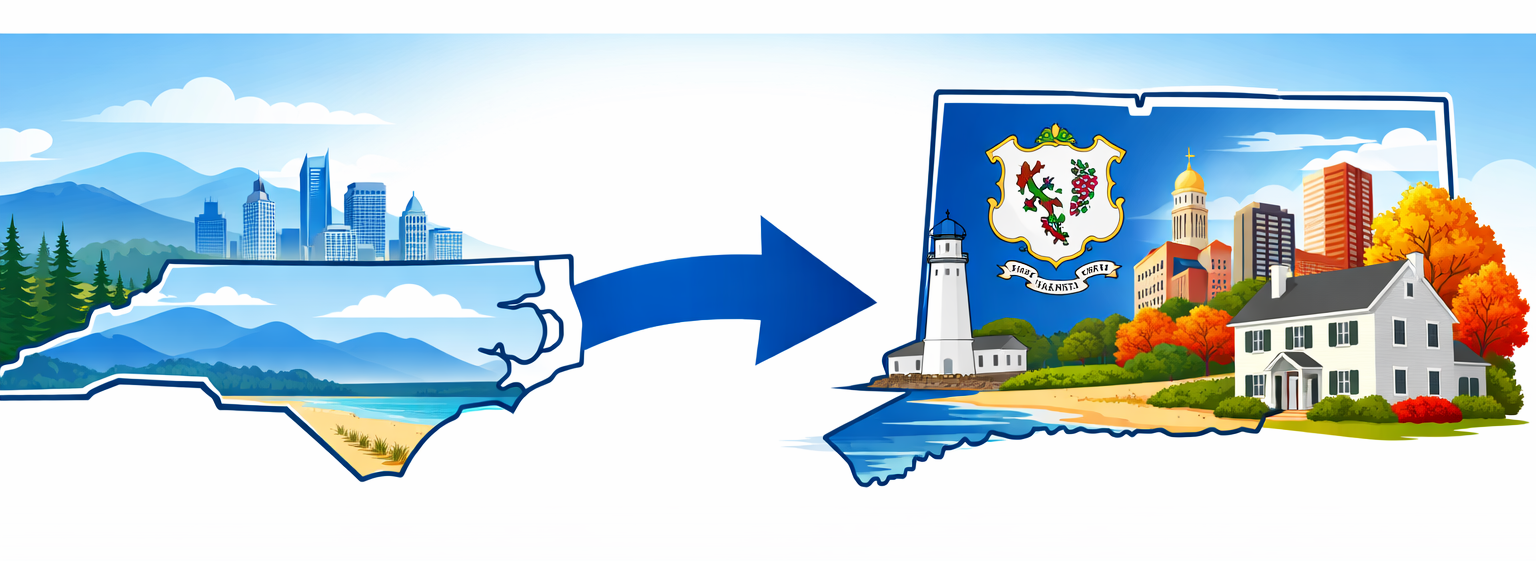
Moving to Connecticut from North Carolina
What to expect near Hartford
If you’re planning a move from North Carolina to Connecticut, the change is bigger than the distance.
The weather feels different. Homes are built differently. The rhythm of daily life is different.
If you’re relocating to the Hartford area, here’s what most people from North Carolina notice first.
1. The weather is a real adjustment
The biggest shock for most people moving from North Carolina is winter.
North Carolina winters are mild. Hartford winters are long and cold. Snow is normal, and winter can stretch from December through March.
- Snowstorms every winter
- Snowplows and parking bans during storms
- Heating bills that matter
- Ice and frozen mornings
If you have never owned a snow brush for your car, you will.
Spring also arrives later than many people expect. In North Carolina you may see flowers in March. In Connecticut, trees often stay bare until April.
The upside is that the seasons are dramatic. Fall is one of the most beautiful times of the year. Crisp air, foliage everywhere, and apple orchards across the region.
Summer may also surprise you in the opposite direction.
Compared to the South, Connecticut summers feel much milder. Temperatures are usually lower and the humidity is often lighter than what people are used to in places like Charlotte or Raleigh.
Many people from the South actually find Connecticut summers far more comfortable.
2. Cost of living is higher
Compared to most of North Carolina, Connecticut costs more.
The biggest differences tend to be property taxes and housing costs.
- Higher property taxes
- Higher home prices in many towns
- Higher heating and utility costs
- Higher insurance costs
The tradeoff is location.
From Hartford you are within reach of Boston and New York City. You also gain access to the rest of New England within a few hours.
Hartford County still offers more value than many nearby metro areas, but buyers moving from North Carolina often notice one big difference right away.
The homes are older.
3. The housing stock is older
In many Hartford-area towns, a large share of homes were built between the 1920s and the 1940s.
You’ll often see:
- Colonials
- Cape Cod homes
- Tudors
- Brick and clapboard construction
These homes often come with hardwood floors, detailed trim, and strong framing.
They can also come with smaller closets and layouts that reflect an earlier era.
Basements are common. Oil heat is common in older homes.
One surprise for many North Carolina buyers: central heat and central A/C are not always standard.
Many homes rely on baseboard heating or radiators, and window A/C units are still common in older houses.
4. Town structure is different
Connecticut towns operate independently.
Near Hartford you may explore places like West Hartford, Glastonbury, Wethersfield, Farmington, or Simsbury.
Each town has its own:
- Property tax rate
- School system
- Zoning rules
Your town choice directly affects both your budget and your lifestyle.
Two neighboring towns can feel very different even if they are only ten minutes apart.
5. You’re close to everything
One thing that surprises many people relocating from the Southeast is how close everything is.
From Hartford you are roughly:
- About 2 hours to Boston
- About 2 hours to New York City
- Under 2 hours to Rhode Island beaches
- A few hours to skiing in Vermont
You live in a smaller metro area but have access to multiple major regions.
That kind of regional access is something many people quickly grow to appreciate.
6. Real estate process differences
The real estate process in Connecticut also has some differences from North Carolina.
Attorneys play a larger role in transactions.
- Attorneys handle closings
- Home inspections are common
- Older mechanical systems are normal
- Oil tanks and septic systems still exist in some areas
Multiple offers can happen in competitive suburbs.
Renovated kitchens and finished basements often add strong value.
7. Lifestyle shift
Moving from North Carolina to Connecticut usually means adjusting expectations.
You may miss the longer warm season and the newer housing stock that is common in many southern communities.
You may gain something different.
- Historic neighborhoods
- Walkable town centers
- Classic New England architecture
- Access to major cities and outdoor destinations
Relocating to Connecticut is not just a change in state.
It is a shift in climate, housing style, and regional culture.
Question to consider: Are you comfortable trading longer southern summers for cooler weather, true seasons, and classic New England towns?